Fridge Not Cooling But the Freezer Works? Here's What's Actually Wrong
By Mluleki Ndlovu · 18 September 2026
If your freezer is cold but your fridge is warm, the cooling system is almost always still working. On most modern fridges the cold air is made in the freezer and blown into the fridge by a fan. When the fridge stops cooling but the freezer stays frozen, the problem is nearly always in that airflow path: a fan that has stopped, vents blocked by food or ice, or a defrost fault letting ice build up over the coils. The compressor and gas are usually fine, which means it is a repair, not a replacement.
A warm fridge with a working freezer is one of the calls I get most often, and it is also the one that worries people the most. They open the fridge, the milk is warm, but the freezer is still rock solid. It feels like the whole machine is on its way out. Nine times out of ten it is not. Let me explain what is actually happening, because once you understand how a fridge makes cold, the fault makes sense.
Why a working freezer and a warm fridge is good news
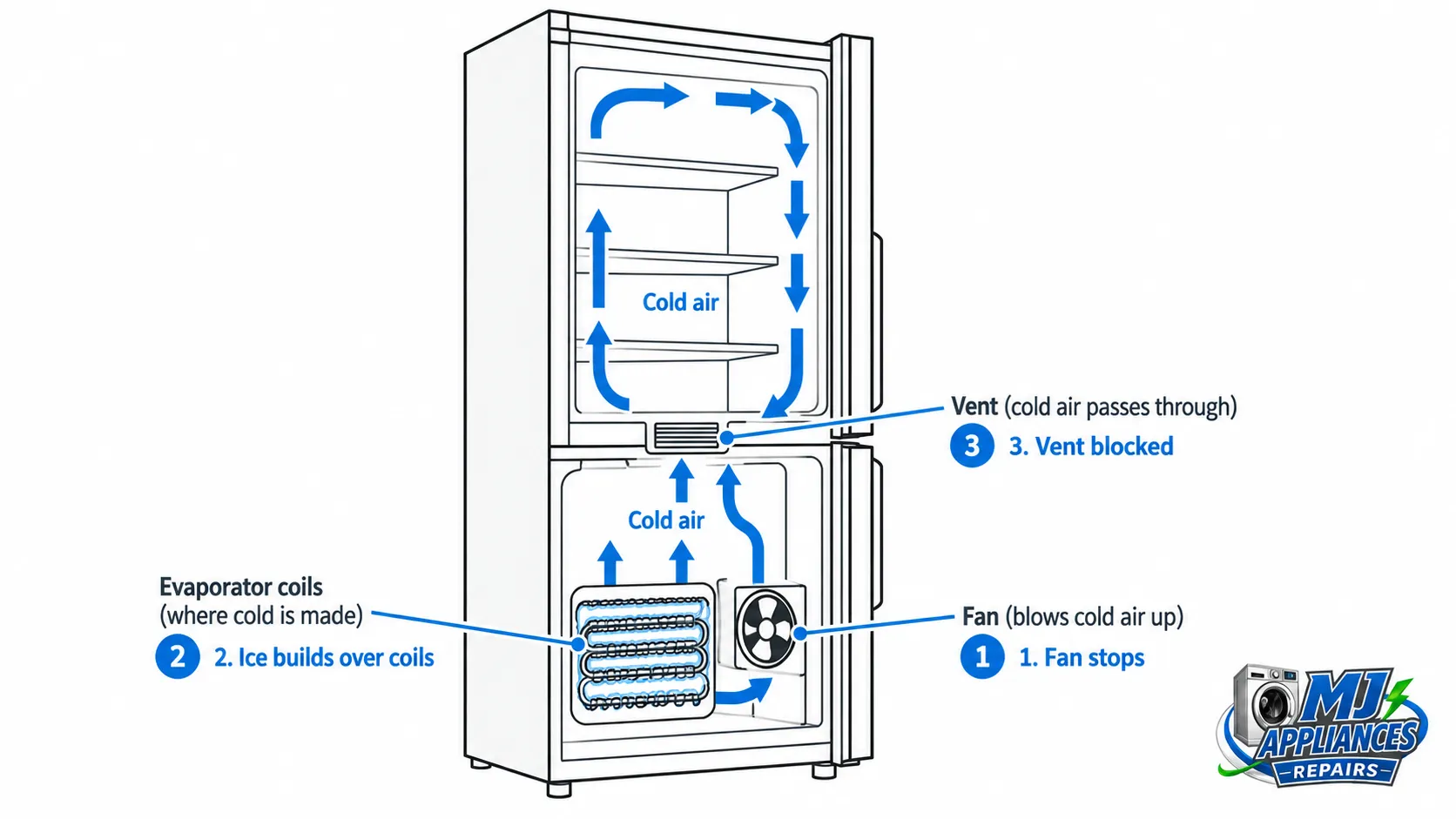
On almost every modern fridge, the cold is not made in the fridge section at all. It is made in the freezer. One set of cooling coils, called the evaporator, sits behind the back panel of the freezer. A small fan then blows that cold air up through a vent into the fridge section. The fridge does not have its own cooling. It borrows cold from the freezer.
So when the freezer is frozen solid, it is telling you something important. The compressor is running. The gas is doing its job. The coldest, hardest part of the system is working. That rules out the two most expensive faults on a fridge straight away, which is exactly why this symptom is usually a repair and not a reason to buy a new fridge.
The problem is almost always in the path that moves cold air from the freezer into the fridge. That path is short, and there are only a few things on it that fail.
The four things that usually cause it
1. The evaporator fan has stopped
This is the most common cause. That fan behind the freezer back panel is what pushes cold air into the fridge. If it stops turning, the freezer stays cold because the coils are right there, but almost no cold reaches the fridge above.
You can often hear this one. Open the freezer and listen. On a healthy fridge you will usually hear a soft whirring from behind the back wall. If the freezer is silent but the compressor at the back of the fridge is humming, a dead evaporator fan is high on the list. The fan itself is a fairly cheap part. Getting to it is the work.
2. Ice has built up over the coils
Your fridge defrosts itself several times a day. A small heater melts any frost off the evaporator coils, and the water drains away. When that defrost system fails, frost does not get melted. It keeps building until a solid block of ice forms over the coils and around the fan.
Once that happens, the fan cannot blow through the ice, or it freezes up completely and stops. The freezer still holds temperature because the ice itself is cold, but no air moves to the fridge. This is the fault behind a lot of "my fridge slowly got warmer over a week" complaints. It does not fail suddenly. The ice builds up over days.
3. The vents are blocked
The cold air travels from the freezer to the fridge through a vent, usually at the top or the back of the fridge section. Pack food tight against that vent, or let ice creep across it, and you throttle the airflow. The fridge goes warm while the freezer stays fine.
This is the one fault on this list you can genuinely fix yourself, and I will show you how below. Before you call anyone, it is worth ruling out.
4. A failed defrost part or sensor
Behind the ice build-up in point two is usually one failed component: the defrost heater has gone open circuit, or the sensor that tells it when to run has failed, or the timer or board that controls the cycle is faulty. On a Defy the defrost system is a common culprit. On Samsung and LG fridges, the control board can be knocked out by a load shedding surge, which then stops the defrost cycle running.
This is where it stops being a DIY job. Testing a defrost heater or a sensor means working on the electrics behind a panel of ice, and that is technician territory. But knowing this is the likely cause means you can describe it properly when you call, which saves time and money.
A load shedding fault most people miss
Here is something specific to how we live on the Highveld. After a long stretch of load shedding, especially the higher stages, the defrost cycle gets disrupted. The fridge runs its cooling hard when the power is on and never gets a clean, timed defrost. Ice starts building over the coils. A week or two later the fridge is warm and the owner blames the compressor, when the real cause was weeks of broken defrost cycles.
The surge when the power comes back is the other half of it. On fridges with an electronic control board, that surge can damage the board that runs the defrost cycle. A start relay is one of the cheaper parts on a fridge. A failed compressor is one of the most expensive. Catching a surge-damaged board early, before it stresses the rest of the system, is the difference between a small bill and a big one. A surge plug on the fridge is cheap protection against most of this.
I saw this pattern on a Defy DFD400 in Vorna Valley. Freezer frozen solid, fridge sitting warm, and the owner was ready to replace the whole unit. Behind the freezer panel was a solid sheet of ice over the coils from a defrost fault. Cleared the ice, sorted the defrost side, and the fridge was holding temperature again. No new fridge needed. That is the job in a nutshell, and it is why I always want to see the fault before anyone talks about replacing anything.
The one check you can safely do yourself
Before you call, rule out the two simple causes: blocked vents and iced-up coils. This is safe to do, but do it properly.
- Switch the fridge off at the wall and pull the plug. Do not skip this. You are going to be reaching inside near a fan.
- Open the fridge and find the vent that lets cold air in from the freezer. It is usually at the top or upper back of the fridge section. Move any food, containers or packaging away from it so nothing is blocking the airflow.
- Open the freezer and look at the back panel. If you can see frost or ice creeping out around the edges of that panel, you likely have a defrost fault building up.
- If you want to confirm it, empty the freezer, leave the fridge switched off at the wall with both doors open for 24 hours, and let it fully defrost. Put towels down to catch the water.
- Plug it back in, switch on, and give it a few hours. If the fridge cools again, ice was your problem. But if it ices up and goes warm again within a week or two, the defrost system itself has failed and needs a technician. The manual defrost only bought you time.
That is the full extent of safe DIY on this fault. Everything past it involves the electrics and the sealed cooling system, and that is where you stop.
When to stop and call a technician
If clearing the vents and defrosting the fridge does not fix it, or it fixes it for a week and then comes back, the fault is inside the system and needs proper diagnosis. Specifically, call someone when:
- You have defrosted it and the ice returns within a week or two. That is a failed defrost component, not something you can keep melting.
- The evaporator fan is silent and does not restart after a full defrost.
- The fridge went warm right after load shedding, and you have an electronic-board fridge. A surge-damaged control board needs testing, not guessing.
- You are being told the fridge "needs a regas." Very often it does not. A blocked airflow path and a gas fault look nothing alike to someone who has opened the machine, and you should not pay to regas a fridge that has a dead fan.
I do not open a fridge to sell you the most expensive fix. I open it to find the actual fault, and on this symptom the actual fault is usually cheap. The call-out covers a proper on-site diagnosis and a full quote before any work starts, and if you go ahead with the repair, that call-out comes off the total. You can read how I work on my fridge repair page, and if you would rather just book, the contact page is here.
If you want a second opinion before you spend anything, that is exactly what an on-site diagnosis is for.
Send me your fridge fault
If your freezer is frozen but your fridge is warm, message me on WhatsApp at 082 419 4125 and tell me what it is doing. Is the freezer fully frozen. Can you hear a fan when you open the freezer. Did it go warm after load shedding. Those three answers tell me most of what I need before I even arrive.