Washing Machine Leaking Clean Water? How to Find Where It Comes From
By Mluleki Ndlovu · 11 September 2026
A leaking washing machine is either leaking clean water or dirty water, and which one it is tells you where the fault sits. Clean water that appears while the machine is filling points to the inlet side: the inlet hose, the water valve, or the soap dispenser. Dirty, soapy water that appears during the wash or drain points to the drain side: the drain hose, the pump, or the sump. Work out which of the two you have first, because it halves the problem before anyone opens the machine.
I get a lot of leak call-outs, and the first thing I do when I arrive is not open the machine. I watch it. A washing machine that leaks clean water has a completely different fault to one that leaks dirty water, and you can often tell which one you are dealing with before a technician even arrives. That saves you time on the phone and it helps you describe the problem properly.
Here is how I think about a leak, in the order I check it.
The first question: is the water clean or dirty?
Every leak I see is one of two kinds, and separating them is half the diagnosis.
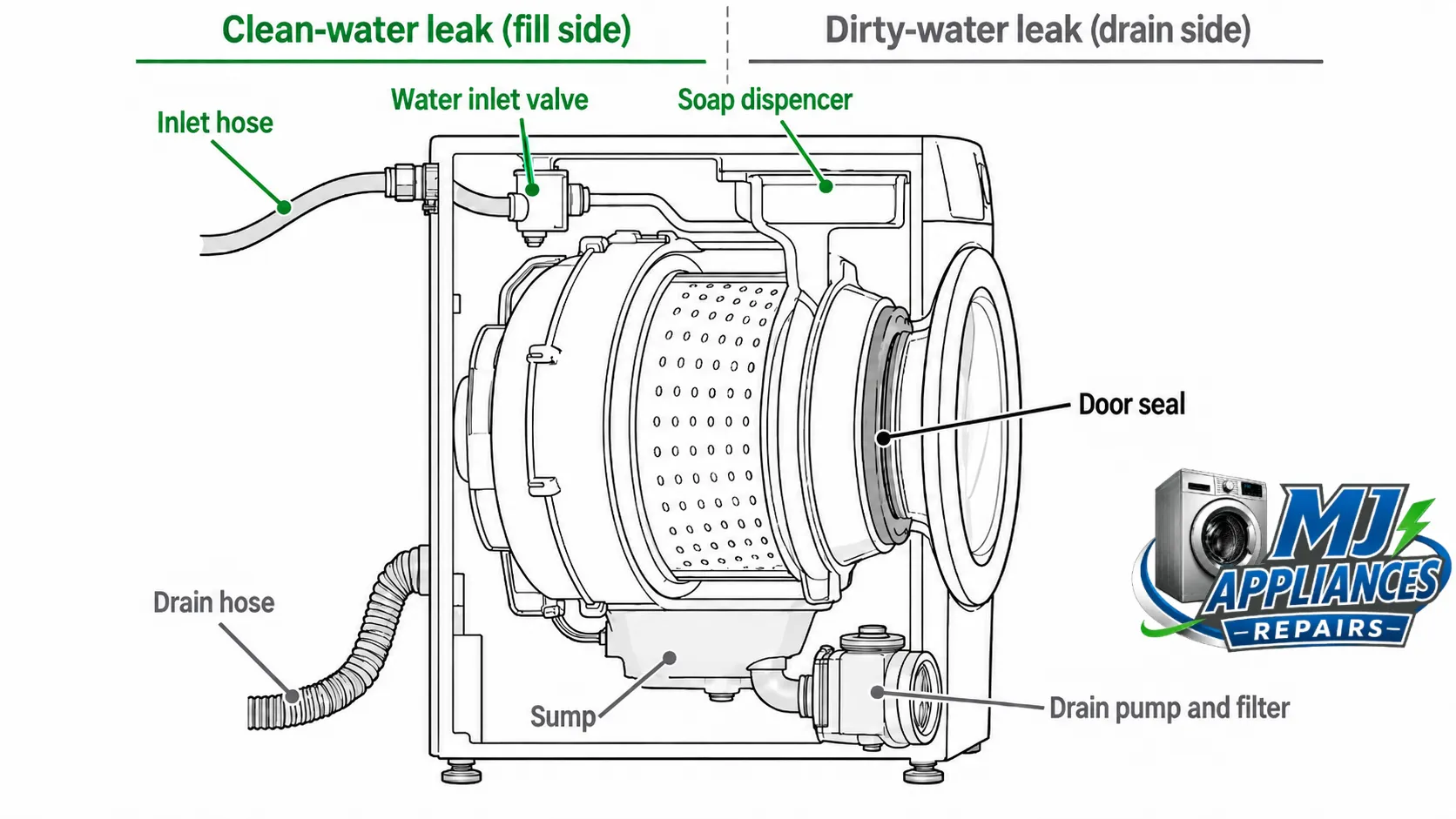
Clean water is water that has not reached the wash yet. If you see clear water on the floor while the machine is filling at the start of a cycle, or the puddle has no suds and does not smell of detergent, the fault is on the fill side. That means the inlet hose at the back, the water inlet valve, or the soap dispenser and the short hose that runs from it into the drum.
Dirty water is water that has already been through the wash. If the puddle is soapy, grey, or appears during the wash or when the machine drains, the fault is on the drain side. That means the drain hose, the drain pump, the filter housing, or the sump hose underneath the drum.
You do not need to open anything to answer this question. You just need to notice when the water appears and what it looks like. Tell me that on the phone and I already know roughly where to start.
Where a front loader actually leaks
People assume a leak means the door seal, because that is the part they can see. Sometimes it is. But a front loader has at least five places water escapes, and most of them are nowhere near the door.
On the fill side, water comes in through the inlet hose at the back, passes through the inlet valve, and on many machines runs through the soap dispenser, or detergent dispenser, before it enters the drum. Any of those can leak clean water, and a soap dispenser that is cracked or blocked will push water out of the top of the machine rather than into the drum.
On the drain side, water leaves through the sump at the bottom of the tub, into the drain pump and its filter, and out through the drain hose. A worn drain hose, a blocked filter, or a cracked sump will leak dirty water low down, usually during the spin or drain.
The door seal sits in the middle. When it fails, it usually leaks from the front during the wash, when the drum is full and turning.
A real job: the leak that came from a house move
I want to tell you about a machine I worked on because the cause is one almost nobody thinks about.
The client had just moved into an estate here in Midrand and brought her washing machine with her, a Hisense front loader. As soon as it started filling, clean water leaked out. She called me early, which turned out to be the right decision.
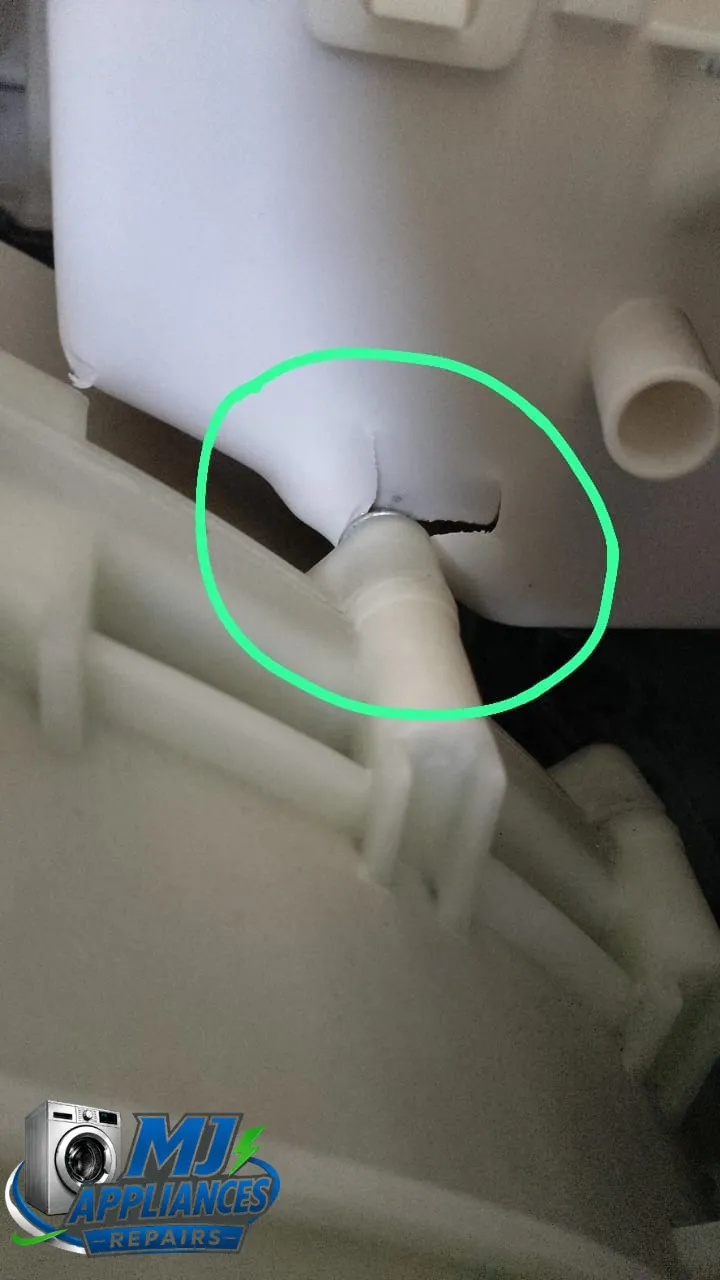
When I opened it, the soap dispenser housing had cracked at the outlet, right where the hose leaves the dispenser to feed the drum. Clean water was escaping from that crack during every fill. But a cracked soap dispenser is the symptom, not the cause. The real cause was the move.
When you buy a new washing machine, it comes with transit bolts. These are metal bolts through the back panel that lock the drum and its suspension in place so it cannot swing around. They are there for one job: to hold the drum still while the machine is being transported. You remove them before the first wash, and you are supposed to keep them and put them back in any time you move the machine again.
She had taken the bolts out when the machine was first installed, years ago, and by the time she moved house they were long gone. So the machine travelled to the new place with the drum completely free. Every bump in the road let the heavy drum swing on its springs, and that movement flexed the plastic around it until the soap dispenser housing cracked. The machine worked fine before the move. The move broke it.
That is why transit bolts matter in both directions. Everyone knows you must take them out before you use the machine. Almost nobody remembers you must put them back in before you move it.
Safe checks you can do yourself
If you have a leak, there are a few things you can safely check before calling anyone. Do not open the machine or remove any panels. These are outside checks only.
- Switch the machine off at the wall and unplug it, then turn off the water supply tap behind the machine. Never inspect a leaking appliance while it is plugged in or while the water is still on.
- Look at the puddle before you clean it up. Note whether the water is clean or soapy, and whether it appeared during fill, wash, or spin. This is the single most useful clue.
- Check the inlet hose connections at the back. With the tap off, feel where the hose screws onto the machine and onto the wall tap. A loose connection or a perished rubber washer here leaks clean water and is sometimes a simple fix.
- Look underneath the machine with a torch. If you can see where the water is coming from without moving or tilting the machine, note it. Do not lay the machine on its side.
- Pull the soap drawer all the way out and look inside the cavity. A drawer blocked with hardened soap can make water back up and spill from the top. Rinsing the drawer is safe and sometimes solves a clean-water leak on its own.
If none of that explains it, the leak is inside the machine, and that is where you stop.
When to stop and call a technician
A leak becomes technician territory the moment it is coming from inside the machine rather than from a hose connection or the soap drawer.
A cracked soap dispenser housing, a failed door seal, a leaking sump, a worn drain hose that runs under the drum, or a cracked tub all need the machine opened up, and some need parts. That is not a job to attempt with the machine plugged in or the panels off. There is mains wiring and a control board inside a front loader, and water reaching the board is exactly the escalation you want to avoid.
That is the real reason not to leave a leak running. I have seen machines that leaked quietly for months, where the water eventually reached the control board and the bearings. On a washer-dryer combo that also means water sitting against the heating side, which brings rust and heat where neither belongs. What starts as a cracked plastic part becomes a board and a bearing job if it is ignored. Catching a leak early is almost always the cheaper repair.
I cover all of this on my washing machine repair page, and if your machine is doing something more like refusing to spin, I have written separately about the faults I check when a machine will not spin. A leak that only shows up as water left in the drum is a different problem again, closer to a machine that is not draining.
On price, I do not quote a repair before I have seen the machine. A leak can be a five-minute hose fix or a soap dispenser replacement that needs a part ordered, and quoting blind would not be honest. The call-out covers a proper on-site diagnosis and a full quote before any work starts, and if you go ahead with the repair the call-out comes off the total. You can read how my call-out and quote work here.
If your machine is leaking, message me on WhatsApp at 082 419 4125 and tell me two things: whether the water is clean or dirty, and when it appears in the cycle. That alone tells me most of what I need to know before I arrive.