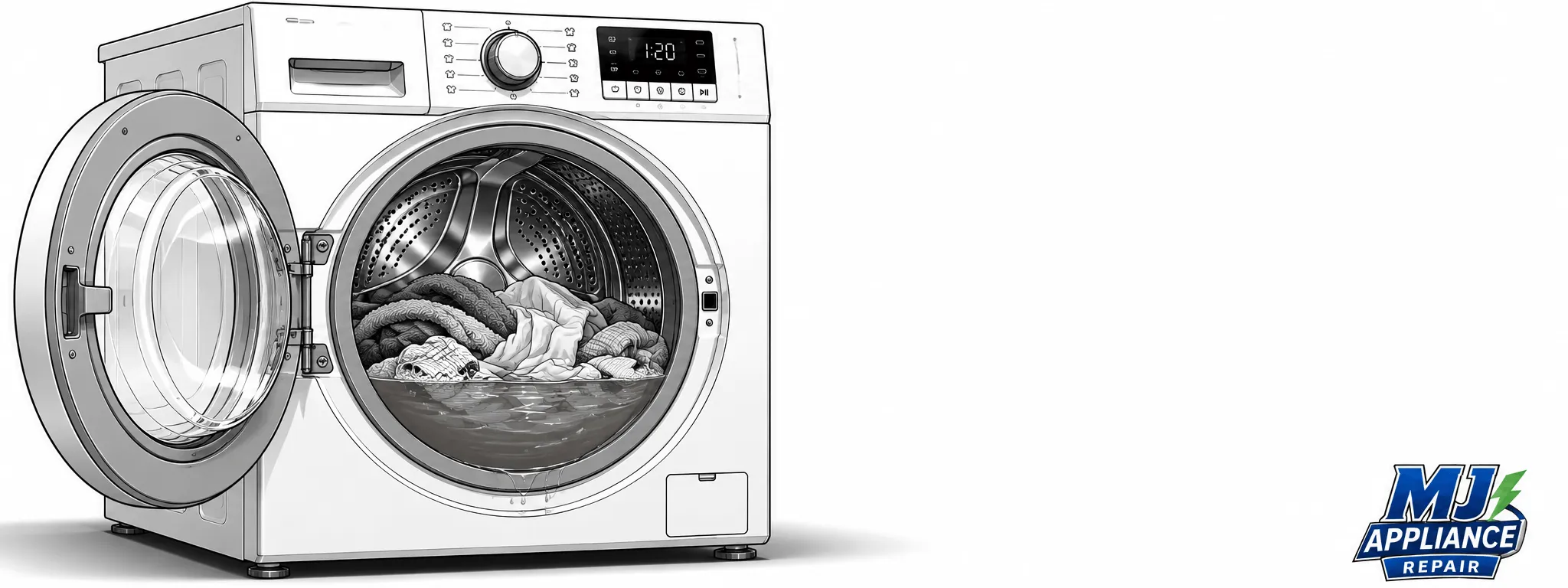
Washing Machine Not Draining? How to Diagnose It Before You Call
By Mluleki Ndlovu · 22 June 2026
A washing machine that won't drain is most often caused by a blocked pump filter, a kinked or clogged drain hose, or a blockage in your home's drain pipe — not a broken machine. On most front-loaders you can check the pump filter yourself: switch off at the wall, find the small flap at the bottom front (bottom-right on most Defy models), put down a towel and a shallow tray because water will come out, and clear out any coins, lint or socks. If the filter and hose are clear and the pump hums but no water moves, the pump itself is probably failing and needs a technician. Always unplug the machine before you check anything.
Opening the door to find your washing sitting in a drum full of grey water is never a nice surprise. But before you decide the machine is broken and start pricing a new one, take a breath. In my experience, a washing machine that won't drain is one of the most common jobs I get called out for — and a lot of the time, the fault is something small you can find yourself in about ten minutes.
I'm Mluleki, and I repair washing machines in Midrand and the areas around it. The way I work is simple: I'd rather show you how to check the easy things first. If it turns out to be a quick fix, you've saved yourself a call-out. If it's something bigger, at least you'll know what you're dealing with before I arrive.
Here's how to work through it safely.
First, switch off and unplug
This matters more than people think. You're about to be near water and electrical parts, so before you touch anything: switch the machine off at the wall and pull out the plug. If you're going to open up any hoses, turn off the water taps behind the machine too.
Keep some towels and a shallow tray or bucket close by. Whatever the cause, there's water sitting in that machine, and it has to go somewhere when you start opening things up. Expect a spill and you won't get caught out.
Check the simple things first
A lot of "not draining" problems aren't really faults at all. Run through these before you open anything up.
The cycle and the load. Some delicate or hand-wash cycles spin very slowly on purpose, so the clothes come out wetter than usual. And if the drum is overloaded, or there's just one heavy item like a towel or duvet in there on its own, the machine may slow the spin down or pause to protect itself. Spread the washing out evenly, choose a drain-and-spin or spin-only cycle, and see if that sorts it.
Too much soap. Using too much detergent makes a lot of suds, and the pump struggles to push those suds through. This is more common in front-loaders. If you've been heavy with the scoop, that on its own can stop it draining properly.
If none of that explains it, move on to the drain itself.
Check the drain hose at the back
Pull the machine forward a bit so you can see the drain hose running from the back to your drain point. You're looking for two things.
First, a kink or a sharp bend that's squeezing the hose closed. Straighten it out.
Second, a hose that's been pushed too far down into the drain pipe. This one catches a lot of people. If the hose goes in too deep, it can suck the water straight back out and stop the machine draining. The end of the hose should sit just inside the pipe, not be shoved all the way down.
While you're back there, check nothing is stuck inside the hose. If you take it off (keep your bucket ready, water will come out), you can run water through it and see if something's blocking it.
Clean the pump filter — the number one cause
This is the most common cause I find, and on most front-loaders you can do it yourself.
Your machine has a filter — some people call it the pump filter or the coin trap. Its whole job is to catch the coins, hair clips, buttons and stray socks before they reach the pump. Over time it gets clogged, and once it does, the water can't get past it.
On most front-loaders, look for a small square flap low down on the front of the machine. On most Defy front-loaders it's in the bottom-right corner. Behind the flap you'll find a round filter cap, and often a short drain hose.
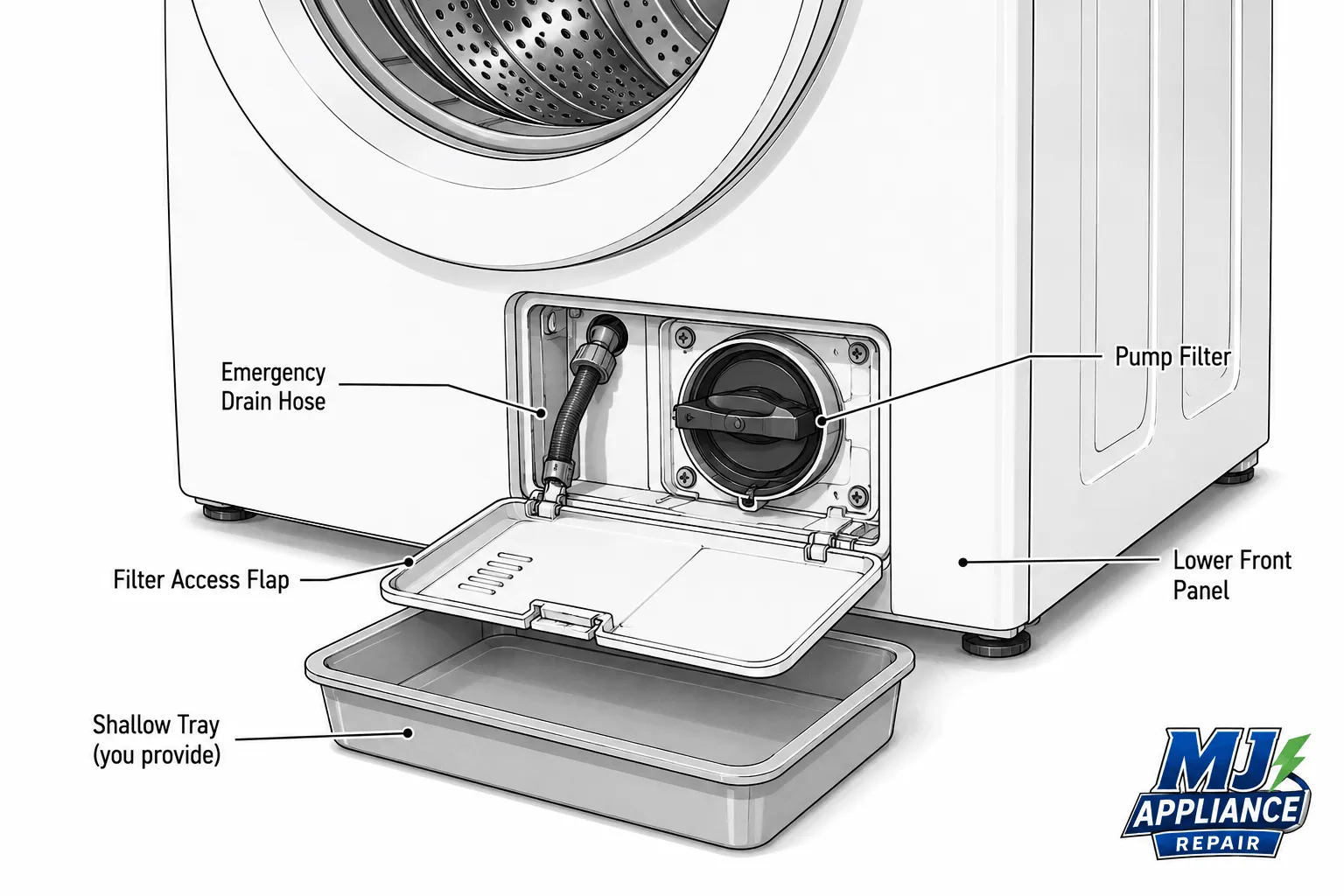
Here's the safe way to clean it:
- Make sure the machine is off at the wall and unplugged (you've already done this).
- Put your towels down and your tray in place.
- If there's a small drain hose behind the flap, pull it out and let the water run into your tray first. This saves you a flood.
- Turn the filter cap slowly to the left to open it.
- Clear out everything you find — lint, coins, the sock you've been missing. Shine a torch inside and check for anything stuck near the little fan inside (that's the impeller — the part that pushes the water out).
- Rinse the filter, screw it back in firmly, close the flap, and run a short rinse to test.
Defy says to clean this filter every three months as normal upkeep. If yours has never been cleaned, don't be shocked by what comes out.
A quick note for top-loaders: many of them don't have this front flap. On a lot of Defy top-loaders there's a mesh filter at the drain tap instead, and good draining depends more on the machine being level and the hose sitting at the right height. So if you've got a top-loader and there's no front flap, that's normal — check the hose, check it's standing level, and check the tap filter.
When the pump itself has failed
If the filter is clean and the hose is clear but it still won't drain, listen carefully during a drain cycle.
A humming or buzzing sound with no water moving usually means the pump is trying to run, but something is stuck in it or it's worn out. No sound at all from the pump usually means the pump has stopped working completely.
This is where it becomes a technician's job. The pump sits behind panels, its wiring connects to the control board, and getting it wrong can mean both a flood and an electric shock. I'd rather you call me at this point than start taking the machine apart. The same goes for anything to do with the control board, the motor wiring or any sealed electrical parts — those are never do-it-yourself jobs.
Sometimes it isn't the machine at all
Here's something a lot of people don't know: if the blockage is in your home's drain pipe instead of the machine, you get exactly the same problem. If water comes back up out of the drain pipe when the machine tries to empty, or if your other nearby drains are slow too, then the blockage is in your plumbing, not the washer. It's worth checking that before you decide the machine is broken — it's a plumbing job, not an appliance one.
What it costs to have it looked at
If it does come down to a technician visit, it helps to know roughly what to expect. For 2025, South African price guides put a typical washing machine repair at around R1,200, with small fixes from about R650 and big part replacements running to R3,500 or more, depending on the brand and the part. A blocked filter cleared on site sits at the low end. A full pump replacement sits higher.
Those are general market figures to give you an idea, not my quote. When I come out, the call-out fee covers a proper diagnosis and a clear quote, so you know exactly what's wrong and what it will cost before any work starts — no guessing.
If you're not sure whether a drainage fault is even worth fixing on an older machine, I've written a separate honest guide on when to repair and when to replace a washing machine in South Africa that walks you through the age-versus-cost maths.
When to call a technician
Call a professional if:
- The pump hums but no water moves, or there's no sound at all during the drain cycle
- You've cleared the filter, the hose and the drain pipe and it still won't drain
- There's a burnt smell, scorched wiring, or an error code you can't clear
- You're not comfortable doing it, or the machine is in a tight or stacked spot you can't move safely
I do washing machine repairs across Midrand and the surrounding areas, all brands, with a workmanship guarantee on the repair. If you've worked through the checks above and you're still stuck, send me a message on WhatsApp at 082 419 4125 and tell me what the machine is doing — the brand, whether the pump hums, and what you've already checked. That helps me come out with the right parts. You can also see what I cover on the services page or get hold of me on the contact page.
A machine full of water feels like a big problem. Most of the time, it isn't.
I do washing machine repairs in Midrand and the suburbs around it — if you're nearby, help isn't far.