Too Much Foam in a Front Loader? Why Hand-Wash Powder Stops the Spin
By Mluleki Ndlovu · 9 October 2026
A front loader that keeps adding time and never finishes its spin is often full of foam, not broken. Thick foam in the bottom of the tub tricks the water-level sensor into reading water that is not there, so the machine keeps draining and retrying the spin. Hand-wash powder is the usual cause, because it is made to foam in a basin. Unplug, clean the detergent drawer, and run rinse cycles with no detergent until the foam is gone, then switch to an auto powder.
If your front loader is full of foam, the minutes remaining keep going backwards and the spin cycle never seems to finish, the machine is usually not broken. Most of the time the problem is the powder. Here is what is happening inside the machine, what you can safely do about it yourself, and where it becomes a job for a technician.
What too much foam does inside a front loader
A front loader washes with a small amount of water and tumbles the clothes through it. That tumbling whips up suds, which is why front loaders need a powder that is made to foam very little.
The machine does not look at the water to know how much is inside. It measures it with a water-level sensor, which reads the air pressure in a small tube or chamber connected to the bottom of the tub. When the sump at the bottom fills with thick foam, the sensor reads that foam as water. So the machine believes there is still water in the drum.
A machine that thinks it still has water will not go up to full spin speed, because spinning a drum full of water would damage it. So it drains, pauses, tries again, and adds time to the cycle while it does. On top of that, the drain pump is built to push water, not foam, so it struggles to clear the suds and the loop keeps going. That is why the display counts down and then jumps back up.
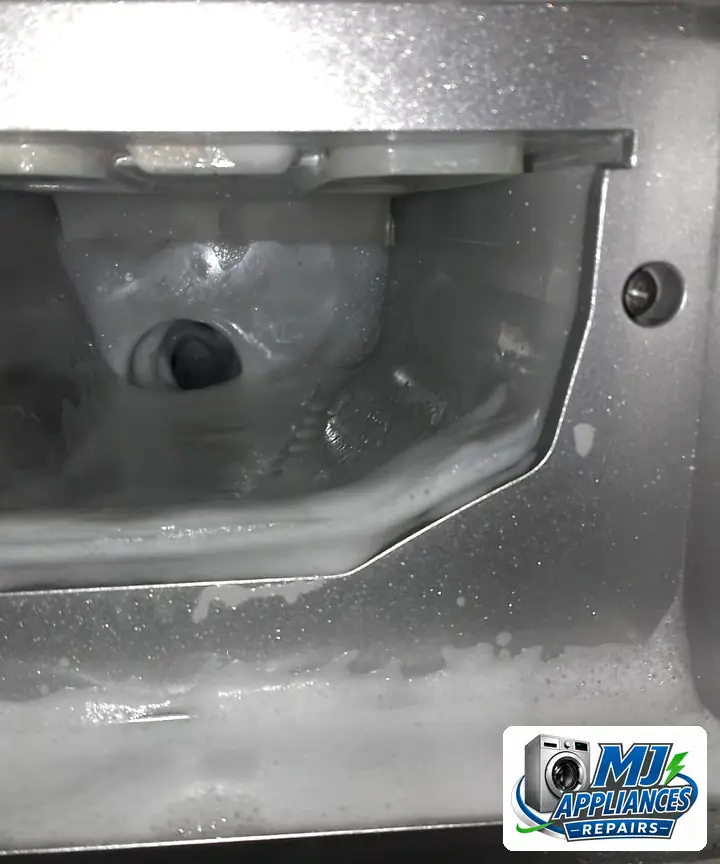
When there is enough foam, it has nowhere left to go and starts pushing back up into the detergent drawer housing, like in the photo above. If you pull your drawer out and see foam sitting behind it, you have found your problem.
Why hand-wash powder causes it
Washing powder comes in two kinds. Hand-wash powder is made for washing clothes in a basin or a bath, where people expect a lot of suds. Auto powder is made for washing machines and is designed to stay low on foam. The packs often look very similar, and many brands sell both side by side on the same shelf.
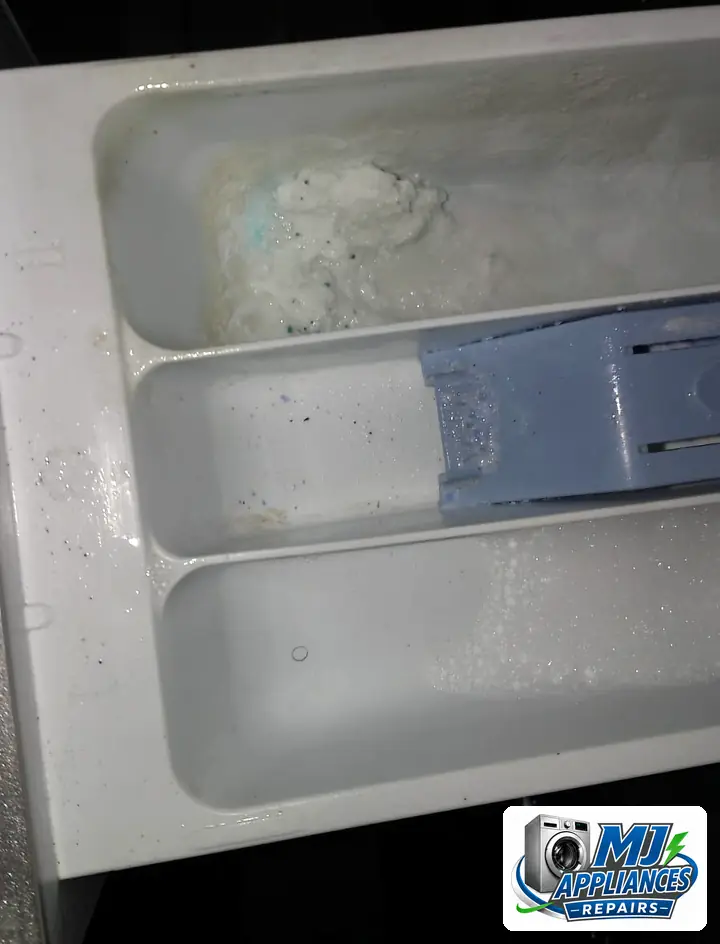
Put hand-wash powder in a front loader and the machine does exactly what you would expect. It foams far more than the machine can handle. Hand-wash powder also tends not to dissolve fully from the drawer, so you often find it caked in the compartment.
The fix is simple. Read the front of the pack. If it says hand-wash, keep it for the basin. For the machine, buy a powder marked auto, or for automatic or front-loading machines. Too much auto powder can cause a smaller version of the same problem, and so can dishwashing liquid or any household soap that was never made for a machine.
A real job: the Defy that kept adding time
One Defy front loader in Johannesburg shows exactly how this plays out. The machine washed normally, then got stuck near the end of the cycle. The display would count down to 9 minutes, jump back to 11, and start counting again. It never finished, and the owner was sure the timer or the board had failed.
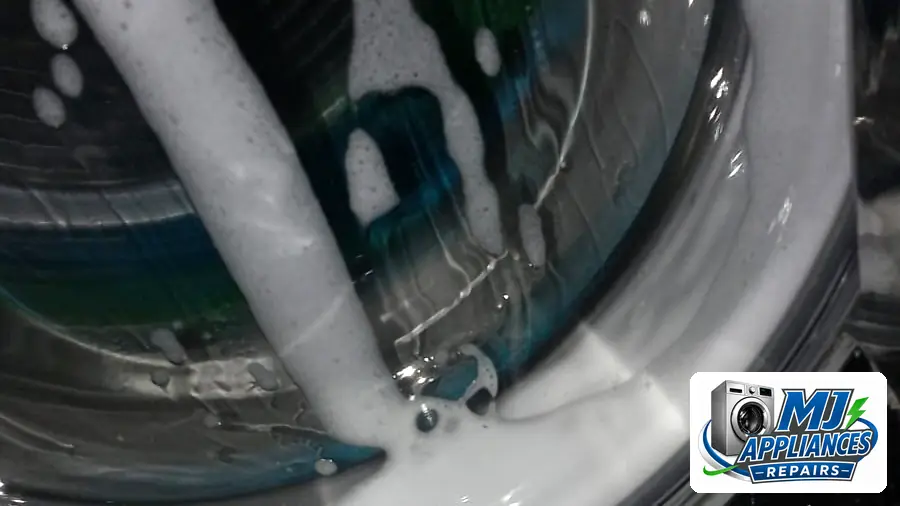
When I opened the detergent drawer, foam had pushed up into the housing behind it, and the drum was white with suds behind the glass. The pack next to the machine was hand-wash powder. I cleaned out the drain pump, which was clogged with foam and powder residue, and ran rinse cycles with no detergent until the foam was gone. No part needed replacing, and the machine finished its cycle normally.
How to clear the foam yourself, safely
This is one of the few spin problems you can often sort out yourself.
- Stop the cycle and switch the machine off at the wall. Then unplug it. Do not keep restarting the same cycle, because it just churns the foam again.
- Pull out the detergent drawer. Rinse any caked powder out under a tap, wipe out the opening it slides into, and put the drawer back.
- Plug the machine back in and run a rinse and spin with no detergent at all. The clothes can stay inside, since they need rinsing too.
- Watch the door glass. If there is still foam when the rinse ends, run another rinse. Repeat until the water behind the glass looks clear.
- If the machine will not drain at all, switch off and unplug it again before you touch anything. Then check the drain pump filter behind the small flap at the bottom front. My guide on a washing machine that will not drain walks you through it step by step. Expect foamy water to come out, so have towels and a shallow tray ready.
- Switch to an auto powder and measure it. Use the dose on the pack for the size of your load, not a scoop by eye.
When to stop and call a technician
If the foam is gone, the rinse water runs clear, and the machine still keeps adding time or refuses to spin, foam was not the whole story. The cause is then more likely the water-level sensor, the small hose that feeds it, the drain pump itself, or the control board. All of those mean opening the machine and working next to mains wiring and water, which is technician territory. A spin fault has several possible causes, and my guide to a washing machine that won't spin goes through them in the order I check them.
Call someone as well if the pump hums but no water moves after you have cleared the filter, if water is running out onto the floor, or if you smell burning. In any of those cases, leave the machine unplugged until it has been looked at.
When I come out, I diagnose the fault on site and give you a full quote before any work starts. You can see the washing machine repairs I do in Midrand and the rest of my services on the site.
If your machine is stuck in a spin loop and you are not sure whether it is foam, WhatsApp me on 082 419 4125. Tell me what the display is doing and which powder you used. A photo of the pack and the door glass helps a lot. You can also reach me through the contact page.